
Lincoln County Court Records After Arrest
Lincoln County criminal cases are part of the North Carolina Judicial Branch in District 39. After arrest and booking at the Harven A. Crouse Detention Center, a magistrate or judicial official sets initial release conditions. The sheriff's P2C roster may show arrest-stage custody data, but the court record begins when the case is filed or entered in the Judicial Branch system. That court record can show the case number, formal charges, court dates, motions, indictments, dispositions, and judgments.
Use Lincoln County jail inmate records for custody status and booking context. Use Lincoln County jail mugshots for booking-photo access questions. Court records after a jail arrest answer a different question: what charges the State filed, whether they remain pending, and how the case is moving through district or superior court.
Find Lincoln County Court Records After Arrest
Lincoln County became an eCourts county on October 13, 2025, and the Judicial Branch announced that eCourts is statewide. The North Carolina Judicial Branch Lincoln County page links to court dates, criminal calendars, forms, services, and Portal search. The court portal is the online place to check case information, court dates, payments, and documents where available.
- Open the North Carolina eCourts Portal.
- Search by defendant name, case number, citation, attorney, or hearing date when known.
- Filter to Lincoln County when the search tool offers a county filter.
- Open the case record and compare each charge with the original jail booking information.
- Use the clerk's public self-service terminal if the online portal does not show the record or document needed.
The Judicial Branch court-records guide says criminal cases can be searched at public self-service terminals by defendant name, case number, or victim/witness name. Paper files can be accessed at the clerk's office in the county where the case is located, with copy fees where applicable.
The eCourts Portal is the statewide online search channel for Lincoln County court records after arrest.
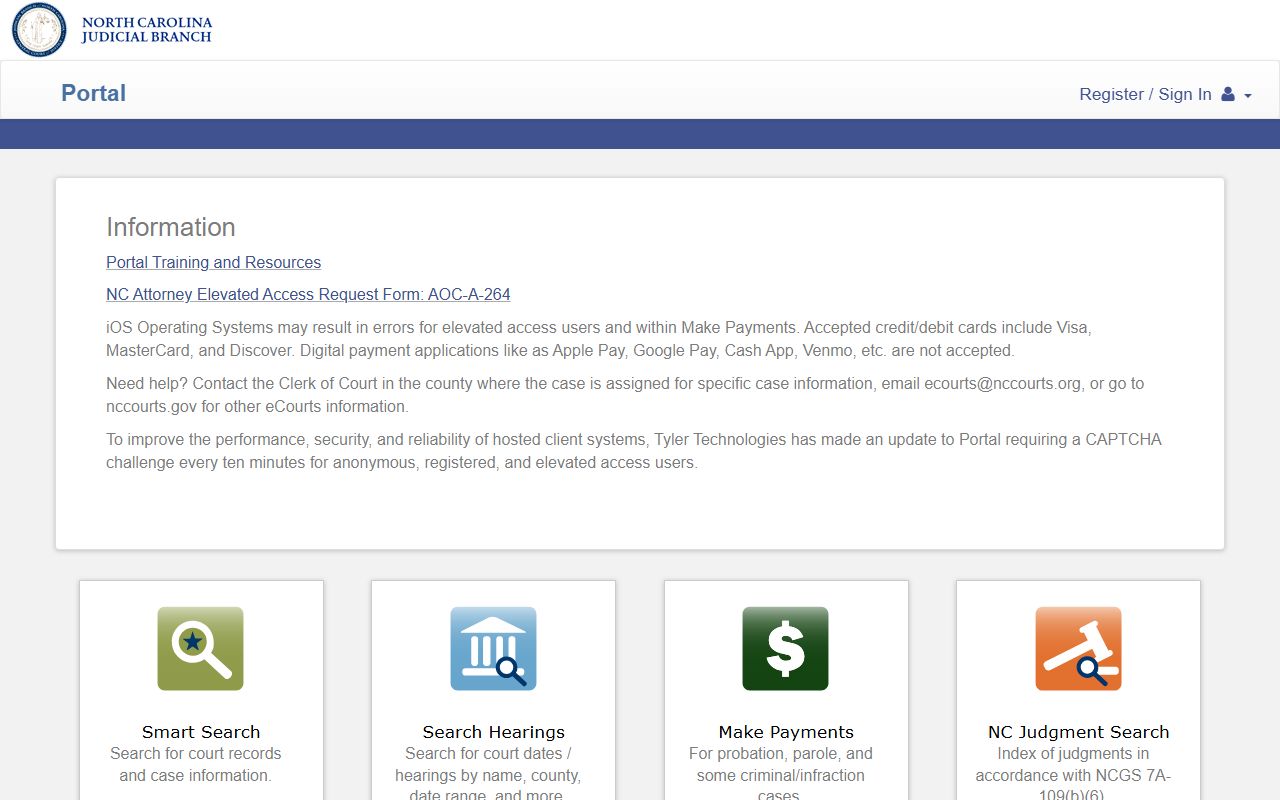
The portal screenshot matches the online court-search channel used after the jail booking stage.
Lincoln County Court Search Fields
The court search fields differ from jail roster fields. A jail roster search often begins with last name and first name. A court search can also use case numbers, citations, attorney names, court dates, and county filters. If a case number appears in a jail record or bond document, it is the most precise way to separate people with similar names.
| Field Label | Type | Required | Notes |
|---|---|---|---|
| Name | Text | Optional by search | Use full legal name when possible. |
| Attorney | Text | Optional | Portal supports attorney search. |
| Citation | Text | Optional | Useful for traffic or citation-based criminal cases. |
| Case Number | Text | Optional | Most precise if known from court notice, warrant, or clerk record. |
| County | Filter | Optional | Choose Lincoln County for local cases. |
| Hearing Date | Date | Optional | Useful for court-date lookups. |
| Terminal defendant name | Text | Optional | Official in-person public terminal search channel. |
From Jail Arrest to Court Case
The path is not one record. It is a sequence. Arrest leads to booking. Booking leads to initial release conditions. The prosecutor reviews the law-enforcement file and decides which charges proceed, change, or end. Once entered in the court system, the case can be tracked through eCourts or the clerk's terminal. Prosecutorial District 39 covers Cleveland and Lincoln Counties, and District Attorney Mike Miller's office represents the State in criminal prosecution.
Arrest -> booking -> first appearance -> prosecutor review -> filed case -> hearings -> disposition.
The District Attorney page for Prosecutorial District 39 identifies the office that decides how criminal charges move forward after a Lincoln County arrest.
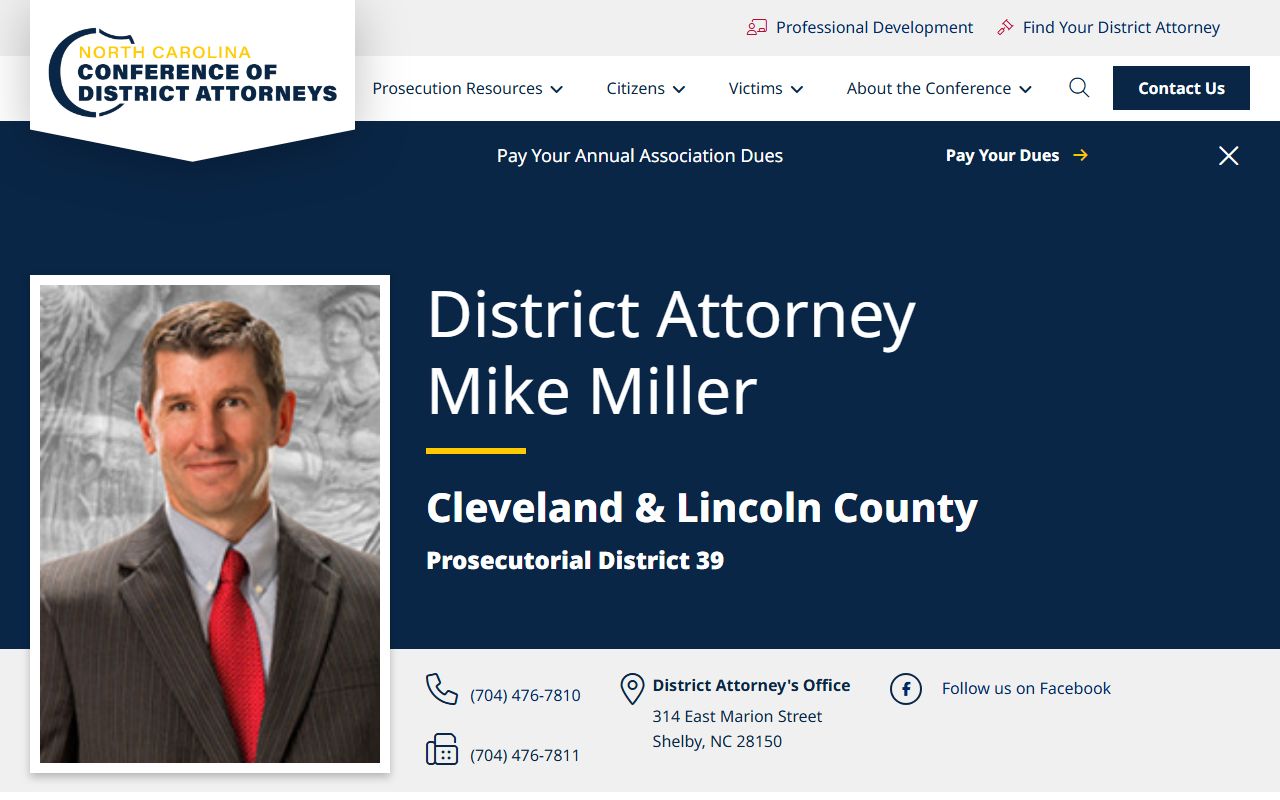
The DA source helps separate arrest allegations from formal court prosecution.
Charging Documents After Arrest
A booking charge is an arrest-stage label. A charging document is part of the court case. North Carolina cases can involve complaints, informations, indictments, warrants, and related filings depending on charge type and stage. The exact document controls what the defendant must answer in court, not a short roster label.
| Document | Who Uses It | What It Means |
|---|---|---|
| Complaint | Officer, magistrate, or prosecutor process | Begins or supports a criminal allegation in court. |
| Information | Prosecutor | Formal charging document used in some prosecutions. |
| Indictment | Grand jury | Felony charging document returned by the grand jury. |
Lincoln County Charge Status
Court records after arrest often change. A charge can remain pending, be amended, be reduced, be dismissed, be superseded by indictment, or end in a disposition. That is why a roster snapshot should not be treated as final charge history. Prosecutor-filed court records are the better place to confirm the present legal status.
| Status | Meaning |
|---|---|
| Pending | No final disposition has been entered. |
| Dismissed | The court or prosecutor ended that charge without conviction. |
| Amended or reduced | The charge changed from the original allegation. |
| Indictment | A grand jury returned a felony charging document. |
| Disposition | The final outcome, such as guilty, dismissed, or not guilty. |
| Conviction | A guilt adjudication by plea, verdict, or judgment. |
Bond Changes After Lincoln County Arrest
North Carolina release conditions can include a written promise to appear, custody release, unsecured bond, secured bond, and no-bond or hold situations. Lincoln County sheriff news releases use secured bond and no-bond hold language. A roster may show early bond information, but later court orders can change release conditions. Serious charges, domestic violence holds, probation or parole warrants, fugitive matters, out-of-county warrants, federal detainers, and immigration detainers can keep a person in custody even when a local bond appears.
| Release Type | How It Works |
|---|---|
| Written promise or PR | The person promises to appear without paying money up front. |
| Unsecured bond | Money may be owed only if release terms are violated. |
| Secured bond | Money, property, or a bondsman guarantee is required before release. |
| Cash bond | Full cash payment is required if ordered. |
| No-bond hold | Custody cannot end by paying a local bond alone. |
Warrants and Lincoln County Arrest Records
No separate official Lincoln County active-warrant search was found beyond the sheriff's P2C tools. P2C Recent Arrests, Daily Bulletin, and Event Search may show arrest events after a warrant has been served. eCourts or a clerk terminal may show returned warrants and related case documents unless sealed or unavailable. A person should not assume there is no warrant just because a public website does not show one.
- Arrest warrant authorizes arrest for an alleged offense.
- Order for arrest may arise from failure to appear, probation, contempt, or court noncompliance.
- Search warrant authorizes a search and may later become part of a court file if returned and not sealed.
- Fugitive warrant can keep a person in custody for another jurisdiction.
- Probation or parole warrant can create a hold that blocks ordinary local release.
Charges vs Convictions
An arrest or charge is not a conviction. Court records after a jail arrest may show allegations before the State proves a case or the defendant enters a plea. Background decisions, employment checks, licensing reviews, and legal consequences should be based on the final court disposition, not a booking label alone.
| Point | Charge | Conviction |
|---|---|---|
| Stage | Allegation filed or pursued in court | Final guilt outcome by plea, verdict, or judgment |
| Can change? | Yes, it can be amended, reduced, dismissed, or superseded | Changes only through later court action |
| Where to verify | eCourts, clerk terminal, charging document | Judgment, disposition, clerk record |
Sealed vs Expunged Records
Some records after arrest may be sealed, confidential, redacted, or expunged. North Carolina public-records law is broad, but it does not make every law-enforcement or court-adjacent document available. Juvenile records, protected identifiers, medical information, active investigation material, and custodial recordings can be restricted. Expunction is a legal process that may remove eligible records from public access after a court order.
| Record Limit | Effect | Where to Start |
|---|---|---|
| Sealed record | Hidden from general public access by law or court order | Clerk or court order |
| Expunction | Eligible record may be removed from public access | North Carolina court process |
| Redaction | Private or exempt details are withheld while non-exempt parts may be released | Record custodian |
Public Access Limits After Arrest
For sheriff records, N.C. Gen. Stat. § 132-1 defines public records broadly, while § 132-6 covers inspection and copies. N.C. Gen. Stat. § 132-1.4 sets special rules for criminal investigation and intelligence records, including records that may not be open while an investigation is active. Custodial law-enforcement recordings are governed separately by § 132-1.4A and are not ordinary public records. Court records should be requested through Judicial Branch channels, not through the county's general public-records portal.
Important: Verify case status with eCourts, the clerk, or the originating agency before relying on an arrest-stage record.
Public Record Search
Sponsored Results